Today's
EarthStation1.com 15% Off Commemorative Memorial Title: TV
Commercials: The Cable Age Classics II DVD, Download, USB Drive
Today, December 22, 2025
December 22: National Cookie Exchange
Day: -- A glorious occasion when festively-decorated cookie tins
and boxes appear at cookie exchange parties. It's a classic
celebration where the host throws a holiday party for family and
friends, to which everyone brings delicious homemade cookies to
share around. The toughest decision is which cookies to take.
Wintertime classics like thumbprint jam cookies or gingerbread are
always festive, but since this day celebrates all cookies, go
ahead and add in some funfetti cookies or lemon squares! According
to some culinary historians, our modern-day idea of cookies may
have been a happy byproduct of cake-baking. The earliest modern
cookies could have been dollops of cake batter used to test if the
oven was hot enough. Technically, a cookie is any kind of
hand-held sweet cake, crisp or soft, so this counts in our book!
We know very early cookies came out of Persia in the 7th century,
as this was very near where sugar originated, and Persia was one
of the earliest empires to get a hold of it. When Spain was
invaded and after the Crusaders established the spice trade,
sugar, and the delectable cookies that it produced began to spread
throughout Europe. In the 14th century, sweet cookies could be
purchased along the streets in Paris. Cookie recipes started to
appear in cookbooks in the 1500s and baking became a serious
profession in the 17th and 18th centuries. Cookies became works of
art and featured careful measurements of particularly-chosen
ingredients. In the late 1600s, Dutch, English, and Scotch
immigrants brought European cookies, like shortbreads and simple
butter cookies, to America. Particularly in the South, these "tea
cakes" took off and were the pride of the Southern housewife.
Cookies were uniquely influenced by American geography once they
arrived in the country. Oranges from the West coast and coconuts
from the South gradually became included in cookie recipes as
railroads were laid to connect the nation. In the 1930s, iceboxes
gave way to icebox cookies. The 1930s saw the accidental advent of
the ever-famous chocolate chip cookies, when the Toll House
Restaurant owner, Ruth Graves Wakefield, thought the chocolate
chips would melt into the batter when baked. Cookie exchanges are
a centuries-old tradition dating back to medieval times. The
classic idea is of a holiday party in which guests bring a
selection of homemade cookies to trade with one another. While the
festive holiday has sweet beginnings, the etiquette associated
with them has become elaborate and strict. Guests are judged for
the quantity and quality of their offering, and cookbooks like The
Cookie Party Cookbook outline the acceptable and unacceptable
practices. Today, cookie exchange traditions live on in families
and friendship groups. Though there is traditionally a strict
etiquette that accompanies the party, you don't have to adhere to
it. The spirit of the day is the joy of cookies, so get together a
group of friends and celebrate the treat on your own terms! On
Sale @ 15% Off Discount Till Midnight PT!
https://store.earthstation1.com/tv-commercials-the-cable-age-classics-ii-dvd.html
Today's
EarthStation1.com 15% Off Commemorative Memorial Title: The
American Adventure: TV History Series 1607-1876 DVD MP4 USB Drive
Today, December 22, 2025
December 22, 1807: The United States: The
History Of The United States: Foreign Policy Doctrines Of The
United States: United Kingdom-United States Relations: The Embargo
Act Of 1807: -- The Embargo Act, forbidding all trade with all
foreign countries, an escalation of attempts to coerce Britain to
stop impressment of American sailors and to respect American
sovereignty and neutrality during the Napoleonic Wars, and also an
attempt to pressure France and other nations in the pursuit of
general diplomatic and economic leverage for the benefit of
America, is passed by the U.S. Congress at the urging of President
Thomas Jefferson as a successor replacement law for the 1806
Non-Importation Act. In the first decade of the 19th century, as
American shipping grew during the Napoleonic Wars, rival nations
Britain and France targeted neutral American shipping as a means
to disrupt the trade of the other nation. American merchantmen who
were trading with "enemy nations" were seized as
contraband of war by European navies. The British Royal Navy had
impressed American sailors who had either been British-born or
previously serving on British ships, even if they now claimed to
be American citizens with American papers. Incidents such as the
Chesapeake-Leopard affair outraged Americans. Congress imposed the
embargo in direct response to these events. President Thomas
Jefferson acted with restraint, weighed public support for
retaliation, and recognized that the United States was militarily
far weaker than either Britain or France. He recommended that
Congress respond with commercial warfare, a policy that appealed
to Jefferson both for being experimental and for foreseeably
harming his domestic political opponents more than his allies,
whatever its effect on the European belligerents. The 10th
Congress was controlled by his allies and agreed to the Act, which
was signed into law on December 22, 1807. The embargo proved to be
a complete failure. It failed to improve the American diplomatic
position, highlighted American weakness and lack of leverage,
significantly (and only) damaged the American economy, and sharply
increased domestic political tensions. Both widespread evasion of
the embargo and loopholes in the legislation reduced its impact on
its targets. British commercial shipping, which already dominated
global trade, was successfully adapting to Napoleon's Continental
System by pursuing new markets, particularly in the restive
Spanish and Portuguese colonies in South America. Thus, British
merchants were well-positioned to grow at American expense when
the embargo sharply reduced American trade activity. The embargo
undermined American unity by provoking bitter protests,
particularly in New England commercial centers. Support for the
declining Federalist Party, which intensely opposed Jefferson,
temporarily rebounded and drove electoral gains in 1808. The
embargo simultaneously undermined Americans' faith that their
government could execute laws fairly and strengthened the European
perception that the republican form of government was inept and
ineffectual. Replacement legislation for the ineffective embargo
was enacted on March 1, 1809, in the last days of Jefferson's
presidency. Tensions with Britain continued to grow and eventually
led to the War Of 1812. On Sale @ 15% Off Discount Till Midnight
PT!
https://store.earthstation1.com/the-american-adventure-series-us-1st-century-4-dv14.html
Today's
EarthStation1.com 15% Off Commemorative Memorial Title: Beethoven:
The Composer As Hero DVD, Video Download, USB Flash Drive
Today, December 22, 2025
December 22, 1808: Aesthetics: Performing
Arts: Premieres: Theatre Premieres: Musical Premieres: Symphony
Premieres: -- A 38-year-old Ludwig van Beethoven conducts and
performs in a four-hour benefit concert he put on for himself at
the Theater an der Wien, Vienna, with the premiere of his Fifth
Symphony, Sixth Symphony, Fourth Piano Concerto (performed by
Beethoven himself) and Choral Fantasy (Fantasia) (with Beethoven
at the piano). The Symphony No. 5 in C minor of Ludwig van
Beethoven, Op. 67, was written between 1804 and 1808. It is one of
the best-known compositions in classical music and one of the most
frequently played symphonies, and it is widely considered one of
the cornerstones of western music. First performed in Vienna's
Theater an der Wien in 1808, the work achieved its prodigious
reputation soon afterward. E. T. A. Hoffmann described the
symphony as "one of the most important works of the time".
As is typical of symphonies during the transition between the
Classical and Romantic eras, Beethoven's Fifth Symphony is in four
movements. The Symphony No. 6 in F major, Op. 68, also known as
the Pastoral Symphony (German: Pastorale), is a symphony composed
by Ludwig van Beethoven and completed in 1808, one of Beethoven's
few works containing explicitly programmatic content. Ludwig van
Beethoven's Piano Concerto No. 4 in G major, Op. 58, was composed
in 1805-1806. The Fantasy (Fantasia) for piano, vocal soloists,
chorus, and orchestra, Op. 80, usually called the Choral Fantasy,
was composed in 1808. Beethoven intended the Fantasy to serve as
the concluding work for the December 22, 1808 concert. The
performers consisted of vocal soloists, chorus, an orchestra, and
Beethoven himself as piano soloist. The Fantasy was designed to
include all the participants in the program and thus unites all of
these musical forces. The work is noted as a kind of forerunner to
the later Ninth Symphony. On Sale @ 15% Off Discount Till Midnight
PT!
https://store.earthstation1.com/beethoven-the-composer-as-hero-dvd.html
Today's
EarthStation1.com 15% Off Commemorative Memorial Title: Butterfly:
The European Myth Of The Oriental Woman DVD, MP4, USB Drive
Today, December 22, 2025
December 22, 1858: #BOTD: #HBD! Giacomo
Puccini, Italian composer known primarily for his operas, regarded
as the greatest and most successful proponent of Italian opera
after Verdi (d. November 29, 1924) is #born Giacomo Antonio
Domenico Michele Secondo Maria Puccini in Lucca, Italy. He was
descended from a long line of composers, stemming from the
late-Baroque era. Puccini's early work was firmly rooted in
traditional late-19th-century romantic Italian opera. Later, he
successfully developed his work in the Verismo (realism) style, of
which he became one of the leading exponents. Puccini's most
renowned works are La Boheme (1896), Tosca (1900), Madama
Butterfly (1904), and Turandot (1924), all of which are among the
most frequently performed and recorded of all operas. Giacomo
Puccini died in Brussels, Belgium aged 65 from complications of
radition therapy for throat cancer caused by years of chain
smoking Toscano cigars and cigarettes. News of his death reached
Rome during a performance of La Boheme. The opera was immediately
stopped, and the orchestra played Chopin's Funeral March for the
stunned audience. He was buried in Milan, in Toscanini's family
tomb, but that was always intended as a temporary measure. In 1926
his son arranged for the transfer of his father's remains to a
specially created chapel inside the Puccini villa at Torre del
Lago. On Sale @ 15% Off Discount Till Midnight PT!
https://store.earthstation1.com/butterfly-the-european-myth-of-the-oriental-woman-dvd.html
Today's
EarthStation1.com 15% Off Commemorative Memorial Title: The
Divided Union: American Civil War TV Series MP4 Download DVD Set
Today, December 22, 2025
December 22, 1864: The American Civil War
(The Civil War, The War Between The States): The Eastern Theater
Of The American Civil War: The Atlanta Campaign: The Fall Of
Atlanta: Sherman's March To The Sea (The Savannah Campaign,
Sherman's March): -- Major General William Tecumseh Sherman
telegraphs to President Abraham Lincoln "I beg to present you
as a Christmas gift the city of Savannah" following the prior
morning's surrender of the city of Savannah, Georgia to Sherman
and his Army Of The Tennessee. Sherman's March To The Sea (also
known as the Savannah Campaign or simply Sherman's March) was a
military campaign conducted through Georgia from November 15 till
December 21, 1864, by Sherman and his Union armies of The Army Of
The Tennessee and the Army Of Georgia. The campaign began with
Sherman's troops leaving the captured city of Atlanta on November
15, and ended with the capture of the port of Savannah on December
21. His forces followed a "scorched earth" policy,
destroying military targets as well as industry, infrastructure,
and civilian property, disrupting the Confederacy's economy and
transportation networks. The operation debilitated the Confederacy
and helped lead to its eventual surrender. Sherman's decision to
operate deep within enemy territory without supply lines was
unusual for its time, and the campaign is regarded by some
historians as an early example of modern warfare or total war. On
Sale @ 15% Off Discount Till Midnight PT!
https://store.earthstation1.com/the-divided-union-american-civil-war-tv-series-3-dual-layer-dvd3.html
Today's
EarthStation1.com 15% Off Commemorative Memorial Title: The
Longest Hatred: Antisemitism & Jewish Persecution DVD, MP4,
USB
Today, December 22, 2025
December 22, 1894: Discrimination: Jewish
History: France: The History Of France: Fin De Siecle:
Antisemitism: The Dreyfus Affair (French: Affaire Dreyfus): -- The
Dreyfus Affair begins in France, when French Colonel Alfred
Dreyfus is wrongly convicted of treason. On October 15, he was
arrested for spying. He was a French Jewish artillery officer
whose trial and conviction in 1894 on false accusations of treason
became one of the most tense political dramas in modern French
history with a wide echo in all Europe. The Dreyfus Affair was a
political scandal that divided the Third French Republic from 1894
until its resolution in 1906. The affair is often seen as a modern
and universal symbol of injustice, and it remains one of the most
notable examples of a complex miscarriage of justice and
antisemitism. The major role played by the press and public
opinion proved influential in the lasting social conflict. The
scandal began in December 1894 with the treason conviction of
Captain Alfred Dreyfus, a young French artillery officer of
Alsatian and Jewish descent. Sentenced to life imprisonment for
allegedly communicating French military secrets to the German
Embassy in Paris, Dreyfus was imprisoned on Devil's Island in
French Guiana, where he spent nearly five years. Evidence came to
light in 1896-primarily through an investigation instigated by
Georges Picquart, head of counter-espionage-identifying a French
Army major named Ferdinand Walsin Esterhazy as the real culprit.
After high-ranking military officials suppressed the new evidence,
a military court unanimously acquitted Esterhazy after a trial
lasting only two days. The Army then accused Dreyfus with
additional charges based on falsified documents. Word of the
military court's framing of Dreyfus and of an attempted cover-up
began to spread, chiefly owing to J'accuse_!, a vehement open
letter published in a Paris newspaper in January 1898 by writer
Emile Zola. Activists put pressure on the government to reopen the
case. In 1899, Dreyfus was returned to France for another trial.
The intense political and judicial scandal that ensued divided
French society between those who supported Dreyfus (now called
"Dreyfusards"), such as Sarah Bernhardt, Anatole France,
Henri Poincare and Georges Clemenceau, and those who condemned him
(the anti-Dreyfusards), such as Edouard Drumont, the director and
publisher of the antisemitic newspaper La Libre Parole. The new
trial resulted in another conviction and a 10-year sentence, but
Dreyfus was given a pardon and set free. Eventually all the
accusations against Dreyfus were demonstrated to be baseless. In
1906 Dreyfus was exonerated and reinstated as a major in the
French Army. He served during the whole of World War I, ending his
service with the rank of lieutenant-colonel. He died in 1935. The
affair from 1894 to 1906 divided France deeply and lastingly into
two opposing camps: the pro-Army, mostly Catholic
"anti-Dreyfusards" and the anticlerical, pro-republican
Dreyfusards. It embittered French politics and encouraged
radicalization. On Sale @ 15% Off Discount Till Midnight PT!
https://store.earthstation1.com/the-longest-hatred-antisemitism-amp-jewish-persecution-dvd-mp3-us3.html
Today's
EarthStation1.com 15% Off Commemorative Memorial Title: Seven Days
In The Life Of The President LBJ MP4 Video Download Or DVD
Today, December 22, 2025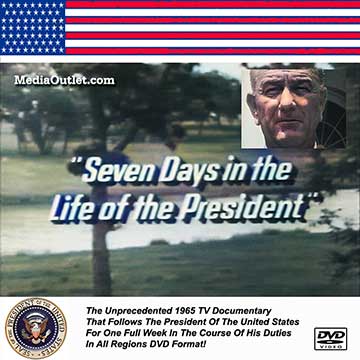
December 22, 1912: #BOTD: #HBD! Lady Bird
Johnson, 27th Second Lady Of The United States (January 20, 1961 -
November 22, 1963), 38th First Lady Of The United States (November
22, 1963 - January 20, 1969), and American beautification activist
(d. July 11, 2007) is #born Claudia Alta Taylor in Karnack, Texas.
During her infancy, her nursemaid Alice Tittle said she was "purty
as a ladybird". The nickname virtually replaced her first
name for the rest of her life. Notably well-educated for a woman
of her era, she proved a capable manager and a shrewd investor.
After marrying Lyndon B. Johnson in 1934 when he was a political
hopeful in Austin, Texas, she used a modest inheritance to
bankroll his congressional campaign, and then ran his office while
he served in the Navy. She bought a radio station, and, later, a
television station which generated revenues that made the Johnsons
into millionaires. As First Lady, she broke new ground by
interacting directly with Congress, employing her own press
secretary, and making a solo electioneering tour. Johnson was an
advocate for beautifying the nation's cities, highways and trails
("Where flowers bloom, so does hope"). The Highway
Beautification Act was informally known as Lady Bird's Bill. She
received the Presidential Medal Of Freedom and the Congressional
Gold Medal, the highest honors bestowed upon a US civilian. She
was beside her husband Lyndon Johnson on board Air Force One when
he was sworn in as the 36th U.S. President following the
assassination of President John F. Kennedy. Lady Bird Johnson died
at home at 4:18 p.m. CDT from natural causes at the age of 94,
attended by family members and Catholic priest Father Robert
Scott. At the funeral service, her beautiful daughter, Luci Baines
Johnson gave a eulogy, saying, "A few weeks before Mother
died, I was taking visiting relatives to the extraordinary Blanton
Art Museum ... Mother was on IV antibiotics, a feeding tube, and
oxygen, but she wasn't gonna let little things like that deter her
from discovering another great art museum. What a picture we were
- literally rolling through the museum like a mobile hospital."
Three weeks before Johnson's death, the rector of St. Barnabas
Episcopal Church in Fredericksburg, which had been her second home
for more than 50 years, had announced to his parishioners that she
had given 300K USD to pay off the church's mortgage. Johnson's
funeral was a public event. On July 15, 2007, a ceremonial cortege
left the Texas State Capitol. The public was invited to line the
route through downtown Austin on Congress Avenue and along the
shores of Lady Bird Lake to pay their respects. The public part of
the funeral procession ended in Johnson City. The family had a
private burial at the Johnson family cemetery in Stonewall, where
she was buried next to her husband, who had died 34 years earlier.
Unlike previous funerals for first ladies, the pallbearers came
from members of the armed forces. On Sale @ 15% Off Discount Till
Midnight PT!
https://store.earthstation1.com/seven-days-in-the-life-of-the-president-dvd-lyndon-johnson-1965.html
Today's
EarthStation1.com 15% Off Commemorative Memorial Title: Hitler's
War 2 Part WWII TV Documentary Series DVD, Download, USB
Today, December 22, 2025
December 22, 1942: The European Civil
War: World War II: The Second European War (The European Theater
Of World War II): The Western Front Of World War II: Science And
Technology During World War II: Science And Technology In Nazi
Germany: Research And Development In Nazi Germany (R & D In
Nazi Germany): Wunderwaffen (German: "Wonder Weapons",
"Miracle Weapons"); V-Weapons (German:
Vergeltungswaffen, "Vengeance Weapons", "Retaliatory
Weapons", "Reprisal Weapons"): The V-2 (The V-2
Rocket, German: Vergeltungswaffe 2, "Vengeance Weapon 2";
Aggregat 4, German: "Aggregate 4", A-4): -- Adolf Hitler
signs the order to develop the V-2 rocket as a weapon. The V-2
(German: Vergeltungswaffe 2, "Retribution Weapon 2"),
technical name Aggregat 4 (A4; German: Agreggate 4), was the
world's first long-range guided ballistic missile. The missile,
powered by a liquid-propellant rocket engine, was developed during
the Second World War in Germany as a "vengeance weapon",
assigned to attack Allied cities as retaliation for the Allied
bombings against German cities. The V-2 rocket also became the
first man-made object to travel into space by crossing the Karman
line (an altitude of 100 km (62 mi; 330,000 ft) above Earth's sea
level) with the vertical launch of MW 18014 on June 20, 1944.
Research into military use of long range rockets began when the
studies of graduate student Wernher Von Braun attracted the
attention of the German Army. A series of prototypes culminated in
the A-4, which went to war as the V-2. Beginning in September
1944, over 3,000 V-2s were launched by the German Wehrmacht
against Allied targets, first London and later Antwerp and Liege.
The attacks from V2s resulted in the deaths of an estimated 9,000
civilians and military personnel, and a further 12,000 forced
laborers and concentration camp prisoners died as a result of
their forced participation in the production of the weapons. As
Germany collapsed, teams from the Allied forces-the United States,
the United Kingdom, and the Soviet Union-raced to capture key
German manufacturing sites and technology. Wernher Von Braun and
over 100 key V-2 personnel surrendered to the Americans.
Eventually, many of the original V-2 team ended up working at the
Redstone Arsenal. The US also captured enough V-2 hardware to
build approximately 80 of the missiles. The Soviets gained
possession of the V-2 manufacturing facilities after the war,
re-established V-2 production, and moved it to the Soviet Union.
On Sale @ 15% Off Discount Till Midnight PT!
https://store.earthstation1.com/hitler39s-war-dvd-2-part-tv-second-world-war-history-ser392.html
Today's
EarthStation1.com 15% Off Commemorative Memorial Title: The Battle
Of The Bulge Documentaries Collection DVD MP4 Download USB
Today, December 22, 2025
December 22, 1944: The European Civil
War: World War II: The Second European War (The European Theater
Of World War II): The Western Front Of World War II: The Battle Of
The Bulge (The Ardennes Offensive) (German: Unternehmen Wacht Am
Rhein, "Operation Watch On The Rhine"): "Nuts!":
-- German troops demand the surrender of United States troops at
Bastogne, Belgium, prompting the famous one word reply by General
Anthony McAuliffe: "Nuts!". The Battle Of The Bulge
began as the Germans launched a big counter-offensive in the
Ardennes Forest along a 75-mile front, taking American troops by
surprise. Names Operation Watch on the Rhine by the Germans, it
was aided by foggy, snowy weather, tand he Germans penetrated 65
miles into Allied lines by the end of December. The German advance
was eventually halted by Montgomery on the Meuse and Patton at
Bastogne. As the weather cleared, Allied aircraft attacked German
ground forces and supply lines and the counteroffensive failed.
There were an estimated 77,000 Allied and 130,000 German
casualties. On Sale @ 15% Off Discount Till Midnight PT!
https://store.earthstation1.com/the-battle-of-the-bulge-dvd-world-war-ii-documentaries.html
Today's
EarthStation1.com 15% Off Commemorative Memorial Title: One Of The
Reasons Why: The War In Vietnam 1945-46 DVD MP4 USB Drive
Today, December 22, 2025
December 22, 1944: World War II: The
Pacific War (The Asia-Pacific War, The Asiatic-Pacific Theater,
The Pacific Theater Of World War II): The Asiatic-Pacific Theater:
French Indochina In World War II: The Viet Minh: The People's Army
Of Vietnam (PAVN) (The Vietnam People's Army (VPA), The Vietnamese
Army, The People's Army: -- The Vietnam People's Army is formed to
resist Japanese occupation of Indochina, now Vietnam. The People's
Army Of Vietnam (PAVN; Vietnamese: Quan doi Nhan dan Viet Nam),
also known as the Vietnamese People's Army (VPA), is the military
force of the Socialist Republic of Vietnam. The PAVN is a part of
the Vietnam People's Armed Forces and includes: Ground Force
(including Strategic Rear Forces), Navy, Air Force, Border Defence
Force, Coast Guard, Cyberspace Operations, and Mausoleum Defence
Force. However, Vietnam does not have a separate Ground Force or
Army branch. All ground troops, army corps, military districts and
specialised arms belong to the Ministry of Defence, directly under
the command of the Central Military Commission, the Minister of
Defence, and the General Staff of the Vietnam People's Army. The
military flag of the PAVN is the flag of the Socialist Republic of
Vietnam, with the words Quyet Thang (Determination To Win) added
in yellow at the top left. During the French Indochina War
(1946-1954), the PAVN was often referred to as the Viet Minh. In
the context of the Vietnam War (1955-1975), the army was referred
to as the North Vietnamese Army (NVA). This allowed writers, the
U.S. military, and the general public, to distinguish northern
communists from the southern communists, called Viet Cong or
National Liberation Front. However, both groups ultimately worked
under the same command structure. The Viet Cong had its own
military called the Liberation Army of South Vietnam (LASV). It
was considered a branch of the PAVN by the North Vietnamese. In
2010, the PAVN undertook the role of leading the 1,000th
Anniversary Parade in Hanoi by performing their biggest parade in
history. On Sale @ 15% Off Discount Till Midnight PT!
https://store.earthstation1.com/one-of-the-reasons-whythe-war-in-vietnam-194546-dvd-downlo194546.html
Today's
EarthStation1.com 15% Off Commemorative Memorial Title: The
Machine That Changed The World The Computer + Bonus 3 MP4s Or DVDs
Today, December 22, 2025
December 22, 1947: The Industrial
Revolution: The Third Industrial Revolution (1947-Present) (The
Information Age, The Computer Age, The Digital Age, The Digital
Electronics Revolution, The Silicon Age, The New Media Age, The
Media Age): The Computer: The History Of The Computer: Digital
Computers: -- Eckert-Mauchly Computer Corporation (EMCC), founded
by J. Presper Eckert and John Mauchly to produce ENIAC, the first
programmable, electronic, general-purpose digital computer in
1945, is incorporated, becoming the first computer hardware
company. On February 1, 1950, Eckert-Mauchly was sold to Remington
Rand. After building the ENIAC at the University of Pennsylvania,
Eckert and Mauchly formed EMCC (March 1946 - 1950) to build new
computer designs for commercial and military applications. The
company was initially called the Electronic Control Company,
changing its name to Eckert-Mauchly Computer Corporation when it
was incorporated on December 22, 1947. Remington Rand was sold in
1955 to Sperry Corporation, and renamed itself Sperry Rand; on
September 16, 1986, a hostile takeover by Burroughs Corporation
CEO and former U.S. Secretary of the Treasury Michael Blumenthal
resulted in the merging of Sperry with Burroughs Corporation under
a new name, Unisys - a portmanteau of "united",
"information", and "systems". The takeover
came about even after Sperry used a "poison pill" in the
form of a major share price hike to dissuade the hostile bid, the
result of which caused Burroughs to borrow much more funding than
was anticipated to complete the bid. Unisys survives to this day.
On Sale @ 15% Off Discount Till Midnight PT!
https://store.earthstation1.com/the-machine-that-changed-the-world-the-computer-dvd-mp4-downloa4.html
Today's
EarthStation1.com 15% Off Commemorative Memorial Title: Twentieth
Century History Documentary Series DVD, Download, USB Drive
Today, December 22, 2025
December 22, 1978: China: The History Of
China: The People's Republic Of China (PRC): The History Of The
People's Republic Of China (The History Of The PRC): Aftermath Of
The Cultural Revolution: Chinese Economic Reform (The Chinese
Economic Miracle, Gaige Kaifang (Chinese: Reform And Opening-up):
-- The pivotal Third Plenum of the 11th National Congress of the
Communist Party of China is held in Beijing, with Deng Xiaoping
reversing Mao-era policies to pursue a program for Chinese
economic reform. The Chinese Economic Reform (Chinese: Gaige
kaifang, Reform And Opening-Up'; known in the West as The Opening
Of China) refers to the program of economic reforms termed
"Socialism with Chinese characteristics" and "socialist
market economy" in the People's Republic Of China (PRC). The
reforms were started by reformists within the Chinese Communist
Party, led by Deng Xiaoping, on December 18, 1978, during the
"Boluan Fanzheng" period, also known as the "Poluan
Fancheng" period (Chinese: "Eliminating chaos and
returning to normal" period), the period of Deng Xiaoping's
far-reaching attempts to correct the mistakes of the Cultural
Revolution launched by Mao Zedong.. These economic reforms went
into stagnation after the 1989 Tiananmen Square protests, but were
revived after Deng Xiaoping's Southern Tour in 1992. In 2010,
China overtook Japan as the world's second-largest economy. As of
2020, China remains in second place as the world's largest
economy, after the United States, according to the three main
indices of economic power ranked by GDP: the International
Monetary Fund, the World Bank and the United Nations. On Sale @
15% Off Discount Till Midnight PT!
https://store.earthstation1.com/twentieth-century-history-15-episode-tv-series-2-dual-layer-d152.html
Today's
EarthStation1.com 15% Off Commemorative Memorial Title: The Rise
And Fall Of Ceausescu Documentary DVD, Download, USB Drive
Today, December 22, 2025
December 22, 1989: The Aftermath Of World
War II: The Cold War: The Cold War (1985-1991) (The End Of The
Cold War): The Dissolution Of The Soviet Union: The Revolutions Of
1989 (The Fall Of Nations, The Autumn Of Nations, The Fall Of
Communism): The Eastern Bloc (The Communist Bloc, The Socialist
Bloc, The Soviet Bloc): The Romanian Revolution (The Christmas
Revolution): -- Communist President of Romania Nicolae Ceausescu
is at last overthrown, after days of bloody confrontations
throughout Romania, by Ion Iliescu, a former member of the
Communist Part Of Romania (CPR) leadership and a Ceausescu ally
prior to falling into the dictator's disfavour in the early 1980.
The deposed dictator and his wife flee Bucharest in a helicopter
as protesters erupt in cheers. By the morning of December 22, the
Romanian Revolution had already spread to all major cities across
the country. The suspicious death of Vasile Milea, Ceausescu's
defence minister, later confirmed as a suicide (he tried to
incapacitate himself with a flesh wound but a bullet severed his
artery), was announced by the media. Immediately thereafter,
Ceausescu presided over the CPEx (Political Executive Committee)
meeting and assumed the leadership of the army. Believing that
Milea had been murdered, rank-and-file soldiers switched sides to
the revolution almost en masse. The commanders wrote off Ceausescu
as a lost cause and made no effort to keep their men loyal to the
government. Ceausescu made a last desperate attempt to address the
crowd gathered in front of the Central Committee building, but the
people in the square began throwing stones and other projectiles
at him, forcing him to take refuge in the building once more. He,
Elena and four others managed to get to the roof and escape by
helicopter, only seconds ahead of a group of demonstrators who had
followed them there. The Romanian Communist Party disappeared soon
afterwards; unlike its kindred parties in the former Soviet bloc,
it has never been revived. After the December 22 overthrow of
Ceausescu, the political vacuum was filled by an organization
named National Salvation Front (FSN: Frontul Salvarii Nationale),
formed spontaneously by second-rank communist party members
opposed to the policies of Ceausescu and non-affiliated
participants in the revolt. Ion Iliescu was quickly acknowledged
as the leader of the organization and therefore of the provisional
authority. He first learned of the revolution when he noticed the
Securitate, the Romanian Secret Police, was no longer tailing him.
On Sale @ 15% Off Discount Till Midnight PT!
https://store.earthstation1.com/the-rise-and-fall-of-ceausescu-dvd.html
Mon, 22 Dec 2025 02:00:00 PST
 December 22: Mathematics Day: --
Celebrates the birth anniversary of India's famed mathematician
Srinivasa Ramanujan. Ramanujan's genius has been regarded by
mathematicians to be on the same level as Euler and Jacobi from
the 18th and 19th centuries. His work in the number theory is
especially regarded and made advances in the partition function.
Since 2012, India's National Mathematics Day is recognized on
December 22 annually with numerous educational events held at
schools and universities throughout the country. In 2017, the
day's significance was enhanced by the opening of the Ramanujan
Math Park in Kuppam, in Chittoor, Andhra Pradesh. Mathematics
lovers like Sri Ramanujan are all around the world and some even
support others enhance their knowledge on the subject. If you are
interested in pursuing mathematics, you can visit Scholaroo to
find information on mathematics-based scholarships and more.
Srinivasa Ramanujan is the brilliant mathematician behind the
inspiration for Mathematics Day in India, whose works influenced
many across the country and the world. Ramanujan was born in 1887,
in Erode Tamil Nadu to an Iyengar Brahmin family. At age 12,
despite lacking a formal education, he excelled at trigonometry
and developed many theorems for himself. After finishing secondary
school in 1904, Ramanujan became eligible for a scholarship to
study at the Government Arts College, Kumbakonam, but could not
secure it since he did not excel in other subjects. At the age of
14, Ramanujan ran away from home and enrolled at Pachaiyappa's
College in Madras, where he too only excelled in mathematics
without managing the same in other subjects and was unable to
finish with a Fellow of Arts degree. Living in dire poverty,
Ramanujan instead pursued independent research in mathematics.
Soon, the budding mathematician was noticed in Chennai's
mathematics circles. In 1912, Ramaswamy Iyer - founder of the
Indian Mathematical Society - helped him get a clerk position at
the Madras Port Trust. Ramanujan then began sending his work to
British mathematicians, receiving a breakthrough in 1913 when
Cambridge-based GH Hardy called him to London after being
impressed by Ramanujan's theorems. Ramanujan made his way to
Britain in 1914, where Hardy got him into Trinity College,
Cambridge. In 1917, Ramanujan was well on his way to success,
after being elected to be a member of the London Mathematical
Society, and he also became a Fellow of the Royal Society in 1918
- one of the youngest to achieve the esteemed position. Ramanujan
returned to India in 1919 because he couldn't get accustomed to
the diet in Britain. His health continued to deteriorate and died
in 1920 at the age of 32. However, his achievements in the field
of mathematics are still highly regarded across the globe.
Ramanujan left behind three notebooks with pages containing
unpublished results, which mathematicians continued to work on for
years to come. So much so that in 2012, former Prime Minister of
India Manmohan Singh declared December 22 - the day of Ramanujan's
birth - as National Mathematics Day to be celebrated across the
country.
https://store.earthstation1.com/albert-einstein-how-i-see-the-world-dvd.html
December 22: Mathematics Day: --
Celebrates the birth anniversary of India's famed mathematician
Srinivasa Ramanujan. Ramanujan's genius has been regarded by
mathematicians to be on the same level as Euler and Jacobi from
the 18th and 19th centuries. His work in the number theory is
especially regarded and made advances in the partition function.
Since 2012, India's National Mathematics Day is recognized on
December 22 annually with numerous educational events held at
schools and universities throughout the country. In 2017, the
day's significance was enhanced by the opening of the Ramanujan
Math Park in Kuppam, in Chittoor, Andhra Pradesh. Mathematics
lovers like Sri Ramanujan are all around the world and some even
support others enhance their knowledge on the subject. If you are
interested in pursuing mathematics, you can visit Scholaroo to
find information on mathematics-based scholarships and more.
Srinivasa Ramanujan is the brilliant mathematician behind the
inspiration for Mathematics Day in India, whose works influenced
many across the country and the world. Ramanujan was born in 1887,
in Erode Tamil Nadu to an Iyengar Brahmin family. At age 12,
despite lacking a formal education, he excelled at trigonometry
and developed many theorems for himself. After finishing secondary
school in 1904, Ramanujan became eligible for a scholarship to
study at the Government Arts College, Kumbakonam, but could not
secure it since he did not excel in other subjects. At the age of
14, Ramanujan ran away from home and enrolled at Pachaiyappa's
College in Madras, where he too only excelled in mathematics
without managing the same in other subjects and was unable to
finish with a Fellow of Arts degree. Living in dire poverty,
Ramanujan instead pursued independent research in mathematics.
Soon, the budding mathematician was noticed in Chennai's
mathematics circles. In 1912, Ramaswamy Iyer - founder of the
Indian Mathematical Society - helped him get a clerk position at
the Madras Port Trust. Ramanujan then began sending his work to
British mathematicians, receiving a breakthrough in 1913 when
Cambridge-based GH Hardy called him to London after being
impressed by Ramanujan's theorems. Ramanujan made his way to
Britain in 1914, where Hardy got him into Trinity College,
Cambridge. In 1917, Ramanujan was well on his way to success,
after being elected to be a member of the London Mathematical
Society, and he also became a Fellow of the Royal Society in 1918
- one of the youngest to achieve the esteemed position. Ramanujan
returned to India in 1919 because he couldn't get accustomed to
the diet in Britain. His health continued to deteriorate and died
in 1920 at the age of 32. However, his achievements in the field
of mathematics are still highly regarded across the globe.
Ramanujan left behind three notebooks with pages containing
unpublished results, which mathematicians continued to work on for
years to come. So much so that in 2012, former Prime Minister of
India Manmohan Singh declared December 22 - the day of Ramanujan's
birth - as National Mathematics Day to be celebrated across the
country.
https://store.earthstation1.com/albert-einstein-how-i-see-the-world-dvd.html
Mon, 22 Dec 2025 02:00:00 PST
December 22: National Short Person Day:
-- "Great things come in small packages", so whether
you're tall and have short people in your life, or you yourself
are short, it's a time to celebrate. On this day, own your
shortness and have fun with the short people in your life! If you
can't point out the short friend in your group, chances are you
are the short friend. Not sure if that's actually you though?
Well, is your view often blocked at concerts? Do you find yourself
doing a slight jog to keep up with your friend's "slow pace?"
Are you still carded at bars, even though you're 30? Well, we have
news for you, you're the short friend. Did you know that Napoleon
Bonaparte, who is known for being short, wasn't actually that
short? In fact, he was around 5 feet 7 inches, which was tall for
Frenchmen of his time. The myth of Napoleon being short actually
arose because the British liked to portray their French enemy as
"little Boney." Also, since Napoleon was usually
surrounded by soldiers from his guard, who were even more above
average height than he was, he often appeared short in comparison.
In his autopsy, he's measured as 5 feet 2 inches, but that was in
French inches which were larger than British and American inches.
Short people have obviously been around forever, but the
classification of short differs depending on time period and
nationality. In America, the average height for a woman is
considered 5 feet 5 inches, while the average height for men is 5
feet 10 inches. In comparison, the average female height in China
is 5 feet 2 inches and the average male height is 5 feet 6 inches.
Therefore a man who might be considered short in America can be
considered tall in China, meaning that tallness and shortness is
all relative. But, if you're short in your country, don't be
afraid to own it. This day is for you!
https://store.earthstation1.com/fiorello-laguardia-dvd-biography-documentary.html
Mon, 22 Dec 2025 02:00:00 PST
December 22, 1956: Civil Rights
Movements: The American Civil Rights Movement (1954-1968):
Anti-Black Racism In The United States: Segregation: Racial
Segregation: Civil Rights Protests: Civil Rights Protests In The
United States: Transport And Bus Segregation In The United States:
Transport And Bus Boycotts In The United States: The Tallahassee
Bus Boycott: -- The Inter-Civic Council (ICC), formed by the
joining of the NAACP, IMA, and Tallahassee Civic League in
response to community fears that an NAACP-led protest would be met
with repression by the state of Florida, calls off the The
Tallahassee Bus Boycott after talks with city authorities resulted
in an agreement to repeal their bus-franchise segregation clause
because it conflicted with the SCOTUS ruling Browder v. Gayle
(1956). The Tallahassee bus boycott was a citywide boycott in
Tallahassee, Florida, that sought to end racial segregation in the
employment and seating arrangements of city buses. On May 26,
1956, Wilhelmina Jakes and Carrie Patterson, two Florida A & M
University students, were arrested by the Tallahassee Police
Department for "placing themselves in a position to incite a
riot". The day after the incident, the Ku Klux Klan burned a
cross in front of the women's residence. News of the cross-burning
quickly spread throughout the campus, and Student Government
Association officers, led by Brodes Hartley, called for a meeting
of the student body. The incidents (the cross-burning and the
arrest) were discussed in the meeting. Student leaders called for
the withdrawal of student support of the bus company and for
students to seek participation in the boycott throughout the
community. Reverend Steele, a member of the Tallahassee
Interdenominational Ministerial Alliance (IMA) and leader in the
NAACP, organized a mass meeting that night. In the meeting, the
Inter-Civic Council (ICC) was born from the joining of the NAACP,
IMA, and Tallahassee Civic League. The ICC was formed in response
to community fear that an NAACP-led protest would be met with
state repression. Its leaders held weekly meetings and the council
was highly active in Civil Rights-related activism. The NAACP
became involved well after the boycott had been started, when
leaders sent a lawyer to defend drivers of boycotters (carpool
drivers) who were arrested for driving unlicensed "for hire"
vehicles. Robert Saunders, representing the NAACP, and Rev. C. K.
Steele then began talks with city authorities while the local
African-American community started boycotting the city's buses.
Three months into the boycott, the demand for the employment of
black bus drivers was met. For months after Browder v. Gayle, the
government upheld de facto segregation, with the instantiation of
an ordinance mandating assigned seats on buses. That led to
arrests of blacks who did not sit in the seats assigned to them.
Efforts persisted in resisting bus segregation and enforcement of
the ordinance became less strict, when blacks again rode the
buses. In 1959, members of the Tallahassee InterCivic Council
tested the success of the boycott by riding the newly integrated
buses; they found that the integration was successful.
Organizational and community leaders did not gather until after
the initiation of the boycott, which highlights the spontaneity of
the student-initiated boycott. Furthermore, the boycott was
initiated during a time in which Tallahassee's civil
rights-related organizational activity was markedly low and the
black community in Tallahassee was unprepared for a protest as
large as the boycott. The creation of the ICC provided an example
of the emergence of new norms and structures. Although it is
widely believed that the centers of Civil Rights Movement activity
were organizational and structural bodies such as the black church
and the NAACP, a new normative structure emerged in the
Tallahassee Bus Boycott. The boycott was a departure from the
circumstances of the Montgomery bus boycott, which was planned and
precipitated by active individuals and organizations; in addition,
the Tallahassee boycott, at least in its initial stages, was
separate from and did not model the latter.
https://store.earthstation1.com/eyes-on-the-prize-ii-dvd-set-4-discs-complete-2nd-seri42.html
Mon, 22 Dec 2025 02:00:00 PST
December 22, 1885: Japan: The History Of
Japan: The Meiji Restoration (Japanese: Meiji Ishin) (The Meiji
Renovation, The Meiji Revolution, The Meiji Reform, The Meiji
Renewal): The Meiji Era (Japanese: Meiji Jidai): Politics Of
Japan: The Government Of Japan: The Cabinet Of Japan: Prime
Ministers Of Japan: -- Ito Hirobumi (October 16, 1841 - October
26, 1909), a samurai lated ennobled Prince by Emperor Meiji,
becomes the first Prime Minister of Japan. As politician, he
served as the first prime minister of Japan from 1885 to 1888, and
later from 1892 to 1896, in 1898, and from 1900 to 1901. He was a
leading member of the genro, a group of senior statesmen that
dictated policy during the Meiji Era. Even out of office as head
of government, Ito continued to wield vast influence over Japan's
policies as a permanent imperial adviser (genkun) and frequent
president of the emperor's Privy Council. A staunch monarchist and
leading proponent of Japan's Westernization, Ito favored a large,
all-powerful bureaucracy that answered solely to the emperor, and
opposed the formation of political parties. Today The Prime
Minister Of Japan (Japanese: Naikaku Sori-Daijin) chairs The
Cabinet Of Japan and has the ability to select and dismiss its
ministers of state. The prime minister also serves as
Commander-In-Chief of The Japan Self Defence Forces and is a
sitting member of either house -- lower house of The House Of
Representatives or the upper house of The House Of Councillors --
of The National Diet (typically The House Of Representatives). The
emperor appoints as prime minister the person who is nominated by
the National Diet (the parliament). The prime minister must retain
the confidence of the House of Representatives to remain in
office. The prime minister lives and works at the Naikaku Sori
Daijin Kantei (Prime Minister's Official Residence) in Nagatacho,
Chiyoda, Tokyo, close to the National Diet Building. Sixty-five
men have served as prime minister, the first of whom was Ito
Hirobumi taking office on 22 December 1885. The longest-serving
prime minister was Shinzo Abe, who served over eight years, and
the shortest-serving was Prince Naruhiko Higashikuni, who served
fifty-four days. The current prime minister is Shigeru Ishiba, who
succeeded Fumio Kishida on 1 October 2024, following the 2024
Liberal Democratic Party presidential election.
https://store.earthstation1.com/japan-a-cherry-blossom-by-many-other-names-mp4-video-download-dvd.html
Mon, 22 Dec 2025 02:00:00 PST
December 22, 1856: #BOTD: #HBD! Frank B.
Kellogg, American lawyer, politician and statesman, U.S. Senator
from Minnesota, 45th United States Secretary Of State during the
Coolidge administration and Freemason, most notable as the
co-author of the Kellogg-Briand Pact for which he was awarded the
Nobel Peace Prize in 1929 (d. December 21, 1937) is #born Frank
Billings Kellogg in Potsdam, New York. The Kellogg-Briand Pact (or
Pact of Paris, officially General Treaty for Renunciation of War
as an Instrument of National Policy) is a 1928 international
agreement in which signatory states promised not to use war to
resolve "disputes or conflicts of whatever nature or of
whatever origin they may be, which may arise among them".
Parties failing to abide by this promise "should be denied of
the benefits furnished by [the] treaty". It was signed by
Germany, France, and the United States on 27 August 1928, and by
most other nations soon after. Sponsored by France and the U.S.,
the Pact renounces the use of war and calls for the peaceful
settlement of disputes. Similar provisions were incorporated into
the Charter of the United Nations and other treaties and it became
a stepping-stone to a more activist American policy. It is named
after its authors, United States Secretary Of State Frank B.
Kellogg and French foreign minister Aristide Briand. The pact was
concluded outside the League Of Nations, and remains in effect. As
a practical matter, the Kellogg-Briand Pact did not live up to all
of its aims, but has arguably had some considerable success. It
did not end war or stop the rise of militarism, and was unable to
keep the international peace in succeeding years. Moreover, it
erased the legal distinction between War And Peace because the
signatories began to wage wars without declaring them. However,
the pact is associated with a marked decline in territorial
conquest of one nation by another in the periods before and after
its signing: the period from 1816 to 1928 saw on average one
conquest every 10 months and 114,088 square miles of territory
taken per year, while the period since World War II has seen one
conquest every four years and 5,772 square miles of territory
taken per year. After WWII, territories that had been conquered
between 1928 and WWII, with some exceptions, were mostly returned
to the countries that had originally held them. The pact's central
provisions renouncing the use of war, and promoting peaceful
settlement of disputes and the use of collective force to prevent
aggression, were incorporated into the United Nations Charter and
other treaties. Although civil wars continued, wars between
established states have been rare since 1945, with a few
exceptions in the Middle East. One legal consequence is that it is
unlawful to annex territory by force, although other forms of
annexation have not been prevented. More broadly, there is now a
strong presumption against the legality of using, or threatening,
military force against another country. The pact also served as
the legal basis for the concept of a crime against peace, for
which the Nuremberg Tribunal and Tokyo Tribunal tried and executed
the top leaders responsible for starting World War II. Frank B.
Kellogg died of pneumonia, following a stroke, on the eve of his
81st birthday in St. Paul, Minnesota. He is buried at the Chapel
of St. Joseph of Arimathea in Washington National Cathedral,
Washington, D.C. In 1880, he became a member of the Masonic Lodge
Rochester No. 21, where he received the degrees of freemasonry on
April 1, April 19, and May 3.
https://store.earthstation1.com/between-the-wars-dvd-set-all-16-tv-shows-4-discs164.html
Mon, 22 Dec 2025 02:00:00 PST
December 22, 1968: China: The History Of
China: The People's Republic Of China (PRC): The History Of The
People's Republic Of China (The History Of The PRC): Maoism (Mao
Zedong Thought): The Cultural Revolution (CR, The Great
Proletarian Cultural Revolution): Down to the Countryside Movement
(Up To The Mountains And Down To The Countryside Movement): The
Sent-Down Youth (The Rusiticaed Youth, The Educated Youth
(Zhiqing): -- The People's Daily (Chinese: Renmin Ribao), the
largest newspaper group in China and an official newspaper of the
Central Committee of the Chinese Communist Party, posted the
instructions of Mao Zedong that "The intellectual youth must
go to the country, and will be educated from living in rural
poverty." The Sent-Down Youth, Rusticated Youth, or "Educated
Youth" (Chinese: Zhiqing), were the young people who -
beginning in the 1950s until the end of the Cultural Revolution,
willingly or under coercion - left the urban districts of the
People's Republic Of China to live and work in rural areas as part
of the "Up to the Mountains and Down to the Countryside
Movement". The vast majority of those who went had received
elementary to high school education, and only a small minority had
matriculated to the post-secondary or university level. After the
People's Republic Of China was established, in order to resolve
employment problems in the cities, starting in the 1950s youth
from urban areas were organized to move to the rural countryside,
especially in remote towns to establish farms. As early as 1953,
the People's Daily published the editorial "Organize school
graduates to participate in agricultural production labor".
In 1955, Mao Zedong asserted that "the countryside is a vast
expanse of heaven and earth where we can flourish", which
would become the slogan for the Down to the Countryside Movement.
Beginning in 1955, the Communist Youth League organized farming,
and encouraged the youth to cultivate the land. From 1962, it was
suggested that the Down to the Countryside Movement be nationally
organized, and in 1964 the Central Committee of the Communist
Party of China established an oversight group. In 1966, under the
influence of the Cultural Revolution, university entrance
examinations were suspended and until 1968, many students were
unable to receive admittance into university or become employed.
Additionally, the Communist Party leadership sent youth to the
countryside to help defuse the student fanaticism set in motion by
the student Red Guards movement from 1966 to 1968. On December 22,
1968, Chairman Mao directed the People's Daily to publish a piece
entitled "We too have two hands, let us not laze about in the
city", which quoted Mao as saying "The intellectual
youth must go to the country, and will be educated from living in
rural poverty." In 1969, many youth were rusticated. High
school students were organized and assigned to the countryside on
a national level. From 1962 to 1979, no fewer than 16 million
youth were displaced (some sources set the minimum at 18 million).
Although many were directed to distant provinces such as Inner
Mongolia, the usual destinations for the sent-down youth were
rural counties in neighboring areas. Many of the Red Guards from
Shanghai travelled no further than the nearby islands of Chongming
and Hengsha at the mouth of the Yangtze. In 1971, numerous
problems with the movement began to come to light, at the same
time as the Communist Party allocated jobs to the youth who were
returning from the country. The majority of these re-urbanized
youth had taken advantage of personal relations (guanxi) to leave
the countryside. Those involved with the "Project 571"
coup denounced the entire movement as being disguised penal labor
(laogai). In 1976, even Mao realized the severity of the
rustication movement and decided to reexamine the issue. But in
the meantime, over a million youth continued to be rusticated
every year. Many students could not deal with the harsh life and
died in the process of reeducation. After Mao's death in 1976,
many of the rusticated youth remained in the countryside. Some of
them had married into their villages. In 1977, university entrance
exams were reinstated, inspiring the majority of rusticated youth
to attempt to return to the cities. In Yunnan in the winter of
1978, the youth used strikes and petitions to implore the
government to hear their plight, which reinforced the pressing
nature of the issue to party authorities. On March 8, 1980, Hu
Yaobang, General Secretary of the Central Committee of the
Communist Party, proposed ending rustication. On October 1 of the
same year, the party essentially decided to end the movement and
allow the youth to return to their families in the cities. In
addition, under age and marriage restrictions, one child per
family of the rusticated youth was permitted to accompany their
parents to their native cities. In the late 1970s, the "scar
literature" included many vivid and realistic descriptions of
their experiences, becoming the first public exploration of the
cost of the Cultural Revolution. A different kind of rustication
literature, more nuanced in its evaluation of the experience, was
inaugurated in the 1980s by the Shanghai writer, and former
zhiqing, Chen Cun.
https://store.earthstation1.com/heart-of-the-dragon-dvds-post-mao-china-all-12-tv-shows-3-di123.html
Mon, 22 Dec 2025 02:00:00 PST
December 22, 1989: #DOTD: #RIP: Samuel
Beckett, Irish novelist, poet, dramatist, playwright, short story
writer, theatre director, literary translator and Nobel Prize
laureate (b. April 13, 1906) #dies of emphysema and possibly
Parkinson's disease in a Paris, France nursing home, aged 83. He
is buried with his wife Suzanne Dechevaux-Dumesnil in the
Cimetiere Du Montparnasse in Paris, sharing a simple granite
gravestone that follows Beckett's directive that it should be "any
colour, so long as it's grey". Samuel Beckett was born Samuel
Barclay Beckett in the Dublin suburb of Foxrock, Ireland. His
literary and theatrical work features bleak, impersonal and
tragicomic experiences of life, often coupled with black comedy
and nonsense. His work became increasingly minimalist as his
career progressed, involving more aesthetic and linguistic
experimentation, with techniques of repetition and self-reference.
He is considered one of the last modernist writers, and one of the
key figures in what Martin Esslin called the Theatre of the
Absurd. A resident of Paris for most of his adult life, during his
1928 to 1930 stay there he met renowned Irish author James Joyce,
which had a profound effect on the young Beckett, who assisted
Joyce in various ways (one of which was research towards the book
that became Finnegans Wake) an resulted in Beckett's first
published work, the critical essay "Dante... Bruno. Vico..
Joyce". Beckett wrote in both French and English. During the
Second World War, Beckett was a member of the French Resistance
group Gloria SMH (Reseau Gloria) and was awarded the Croix de
Guerre in 1949. He was awarded the 1969 Nobel Prize in Literature
"for his writing, which - in new forms for the novel and
drama - in the destitution of modern man acquires its elevation".
In 1961 he shared the inaugural Prix International with Jorge Luis
Borges. He was the first person to be elected Saoi (Gaelic: "Wise
One" or "Bard") of Aosdana (Gaelic: "People Of
The Arts", an Irish arts society) in 1984.
https://store.earthstation1.com/is-there-one-who-understands-me-the-world-of-james-joyce-dvd.html
Mon, 22 Dec 2025 02:00:00 PST
December 22, 1965: #DOTD: #RIP: Richard
Dimbleby, English journalist, producer and broadcaster, who became
the BBC's first war correspondent, then its leading TV news
commentator (b. May 25, 1913) #dies in St Thomas' Hospital, London
at the age of 52. He had been suffering from testicular cancer
which had been diagnosed five years earlier. In 1962 he had
presented a documentary on the links between heavy tobacco smoking
and lung cancer. Dimbleby decided to admit he was ill with cancer,
which, at the time, was a taboo disease to mention. It was helpful
in building public consciousness of the disease and investing more
resources in finding a cure. The Richard Dimbleby Cancer Fund was
founded in his memory. Dimbleby was cremated, the ceremony
receiving national publicity. He is buried in a cenotaph at
Westminster Abbey, Westminster, Greater London, England. Born
Frederick Richard Dimbleby near Richmond, Surrey in South East
England, he pioneered as host of the long-running current affairs
programme Panorama a popular style of interviewing that was
respectful but searching. At formal public events, he could
combine gravitas with creative insights based on extensive
research. He was also able to maintain interest throughout the
all-night election specials. The annual Richard Dimbleby Lecture
was founded in his memory. He was the BBC's war correspondent who
accompanied the British 11th Armoured Division to the liberation
of the Bergen-Belsen concentration camp, and described the scene
in a report so graphic that the BBC declined to broadcast it for
four days, relenting only when he threatened to resign: "...Here
over an acre of ground lay dead and dying people. You could not
see which was which... The living lay with their heads against the
corpses and around them moved the awful, ghostly procession of
emaciated, aimless people, with nothing to do and with no hope of
life, unable to move out of your way, unable to look at the
terrible sights around them ... Babies had been born here, tiny
wizened things that could not live ... A mother, driven mad,
screamed at a British sentry to give her milk for her child, and
thrust the tiny mite into his arms, then ran off, crying terribly.
He opened the bundle and found the baby had been dead for days.
This day at Belsen was the most horrible of my life.". Two of
his sons, David Dimbleby (host of "An Ocean Apart) and
Jonathan Dimbleby (host of "The Unknown Famine"), also
became broadcast journalists. Richard Dimbleby was frequently
parodied on, and even appeared in, the iconic British radio comedy
series The Goon Show starring Spike Milligan, Peter Sellers and
Harry Secombe.
https://store.earthstation1.com/a-painful-reminder-evidence-for-all-mankind-holocaust-dvd.html
Mon, 22 Dec 2025 02:00:00 PST
December 22, 1943: Aviation: The History
Of Aviation: The History Of Military Aviation: Maiden Flights:
Military Aviation Maiden Flights: -- The Junkers Ju 388
Stortebeker (named after 14th century German pirate Klaus
Stortebeker) multi-role aircraft based on the Ju 88 airframe by
way of the Ju 188 makes its first flight in its prototype Ju 388
L-0/V7 form. It differed from its predecessors in being intended
for high altitude operation, with design features such as a
pressurized cockpit for its crew. The Ju 388 was introduced very
late in the war, and production problems along with the
deteriorating war conditions meant that few were built. It was
developed by the Reichsluftfahrtministerium (RLM) (The Reich
Aviation Ministry) when it learned of the American Boeing B-29
Superfortress heavy bomber in late 1942. Serious concerns as to
B-29 capability developed in early 1944, when YB-29 "Hobo
Queen" made a well-publicised appearance at RAF Bovingdon,
which had been cryptically hinted-at in an American-published
Sternenbanner German language propaganda leaflet from Leap Year
Day in 1944, meant to be circulated within the Reich. Its
performance estimates frightened the Luftwaffe; the B-29 had a
maximum speed of around 560 km/h (350 mph), and could attack at a
cruise speed of about 360 km/h (225 mph) at 8,000-10,000 m
(26,000-33,000 ft), an altitude where no current Luftwaffe
aircraft was effective, and for which the only effective Wehrmacht
anti-aircraft gun was the rarely-deployed 12.8 cm FlaK 40, which
could effectively fire to an altitude of 14,800 metres (48,600
ft). In response, the Luftwaffe undertood to develop a number of
day fighters and bomber destroyers with greatly enhanced speed and
altitude performance. The Junkers Ju 388 was one of these. It was
some time before deliveries of the production models started due
to delivery delays of its Jumo 222 engine, capable of reaching
around 700 km/h (435 mph). By the time the engines were widely
available, it was clear that B-29 bombers were actually being sent
to the Asia and the Pacific and would not be operating over
Germany anytime soon. German photo-reconnaissance efforts had
practically disappeared due to the increased performance of the
Allied defenses, so production mostly concentrated on the L
reconnaisance model. Deliveries started in August 1944 but few Ju
388s were completed; about 47 L models seem to have been built.
https://store.earthstation1.com/war-props-the-junkers-ju-88-dvd-mp4-usb-flash-dr884.html
Mon, 22 Dec 2025 02:00:00 PST
December 22, 1964: Aviation: The History
Of Aviation: The History Of Military Aviation: Maiden Flights:
Military Aviation Maiden Flights: -- The first test flight of the
Lockheed SR-71 Blackbird takes place at Air Force Plant 42 in
Palmdale, California. The Lockheed SR-71 Blackbird is a
long-range, Mach 3+ strategic reconnaissance aircraft that was
operated by the United States Air Force. It was developed as a
black project from the Lockheed A-12 reconnaissance aircraft in
the 1960s by Lockheed and its Skunk Works division. American
aerospace engineer Clarence "Kelly" Johnson was
responsible for many of the design's innovative concepts. During
aerial reconnaissance missions, the SR-71 operated at high speeds
and altitudes to allow it to outrace threats. If a surface-to-air
missile launch were detected, the standard evasive action was
simply to accelerate and outfly the missile. The SR-71 was one of
the first aircraft to be designed with a reduced radar
cross-section. The SR-71 served with the U.S. Air Force from 1964
to 1998. A total of 32 aircraft were built; 12 were lost in
accidents, but none were lost to enemy action. The SR-71 has been
given several nicknames, including "Blackbird" and
"Habu". Since 1976, it has held the world record for the
fastest air-breathing manned aircraft, a record previously held by
the related Lockheed YF-12.
https://store.earthstation1.com/war-jets-the-lockheed-sr71-blackbird-d71.html
Mon, 22 Dec 2025 02:00:00 PST
December 22, 1979: #DOTD: #RIP: Darryl F.
Zanuck, American studio executive, actor, director, film director,
producer, film producer and screenwriter (b. September 5, 1902)
#dies of pneumonia in Palm Springs, California at the age of 77.
He is interred at the Westwood Village Memorial Park Cemetery,
near his wife, Virginia Fox in Westwood, Los Angeles, California.
Born Darryl Francis Zanuck in Wahoo, Nebraska, Darryl Zanuck
started contributing stories for films starting in the silent era.
He played a major part in the Hollywood studio system as one of
its longest survivors (the length of his career was rivaled only
by that of Adolph Zukor). He earned three Academy Awards as
producer for Best Picture during his tenure, but was responsible
for many more. He co-founded 20th Century Studios, which later
merged with Fox. His films included the first sound picture The
Jazz Singer, and also The Snake Pit and The Grapes Of Wrath.
https://store.earthstation1.com/hollywood-the-fabulous-era-dvd-talking-picture-history.html
Mon, 22 Dec 2025 02:00:00 PST
December 22, 1924: #BOTD: Joe Pyne,
American radio and television talk show host (d. March 23, 1970)
is #born Joseph Pyne in Chester, Pennsylvania. Joe Pyne pioneered
the confrontational style in which the host advocates a viewpoint
and argues with guests and audience members. He was an influence
on other major talk show hosts such as Bill O'Reilly, Glenn Beck,
Wally George, Alan Burke, Chris Matthews, Morton Downey, Jr., Bob
Grant, and Michael Savage. Joseph Pyne was born in Chester,
Pennsylvania. Pyne graduated from Chester High School in 1942, and
immediately enlisted in the United States Marine Corps. He saw
combat in the South Pacific, where he earned three battle stars.
In 1943, during a Japanese bombing attack, he was wounded in the
left knee; he earned a Purple Heart as a result of his injuries.
In 1955, he lost the lower part of that leg due to a rare form of
cancer. Discharged from the Marines at the end of World War II,
Pyne attended a local drama school to correct a speech impediment.
While studying there, he decided to try radio. He worked briefly
in Lumberton, North Carolina, before he was hired at a new
station, WPWA, in Brookhaven, Pennsylvania. However, he argued
with the owner and was fired. Next, he got a job at radio station
WILM (AM) in Wilmington, Delaware, the first of three times he
would work at that station. He moved to WVCH, a new station in
Chester, which went on the air in March 1948. Seeing little chance
to advance his career in Chester, Pyne left after a year and a
half. He moved to Kenosha, Wisconsin, where he was hired at WLIP,
owned by local station owner William Lipman (hence the call
letters). After six months of hosting innocuous programs such as
Meet Your Neighbor from various grocery stores, he quit during a
confrontation with WLIP management in which he threw Lipman's
typewriter against a wall. Pyne worked at several stations in
Atlantic City, New Jersey, and began to change his style of
broadcasting. Pyne gradually tired of being a disc jockey who made
comments about politics and current events. He developed his
on-air persona as an opinionated host who knew something about
everything. He returned to WILM, where he debuted as a talk show
host in 1950. He would later tell reporters that he first
experimented with two-way talk during his time in Kenosha. His new
show was unique. He named it It's Your Nickel, a popular idiomatic
phrase when a call from a pay phone cost five cents. The format
was Pyne expressing his opinions on various topics. Listeners
would call to ask questions, offer their own opinions, or raise
new topics. At first, Pyne didn't put callers on the air; he
paraphrased for the audience what they had said. Soon the callers
and his interaction with them became the heart of the show. Pyne
became famous for arguing with or insulting those with whom he
disagreed. One of his trademark insults was "Go gargle with
razor blades." In 1954, Pyne moved to television with The Joe
Pyne Show, broadcast by WDEL-TV in Wilmington. In 1957, he moved
to Los Angeles. His initial show was unsuccessful, and he returned
to Wilmington. He hosted a TV talk show on WVUE, which was also
seen in Philadelphia, and received positive reviews from critics.
In the late 1950s the local black press generally praised him for
inviting black newsmakers on his show to discuss issues of concern
to their community. One of his regular guests was a member of the
editorial staff of the area's black newspaper, the Philadelphia
Tribune, usually a columnist or the newspaper's publisher. Pyne
continued this program until late 1959, when he returned to Los
Angeles. This time, he was more successful. By 1960, he was
hosting a radio show on KABC (AM). The acerbic Bob Grant took over
Pyne's show in 1964, and Pyne continued on KLAC. This led to a
television show on KTTV. In 1965, during the Watts Riots in Los
Angeles, Pyne was interviewing a black militant on his TV show. At
one point, Pyne opened his coat to reveal that he was carrying a
handgun. His guest did likewise. The station suspended Pyne for
one week as a result of this stunt, which led to both the FCC
considering pulling KTTV's license and syndication companies
looking at distributing Pyne's show nationally. Later that year,
Viacom did begin syndicating "The Joe Pyne Show",
carried by as many as 85 television stations (and 250 radio
stations) at its peak. At the height of his fame, he was making
200K USD annually. At the beginning of each show he was introduced
by an announcer as " the loveable, but opinionated Joe Pyne!"
In 1966, NBC gave Pyne a daytime game show, Showdown. Its
distinguishing feature was that contestants who missed a question
would fall to the floor in a breakaway chair. Showdown lasted only
three months and was replaced by The Hollywood Squares. Pyne spoke
out against racial discrimination and supported the Vietnam War.
He ridiculed hippies (a favorite target), homosexuals, and
feminists. Though generally a conservative, Pyne spoke in favor of
labor unions. His tendency toward insult and vitriol offended most
critics, who called him "outrageous," "belligerent,"
and "self-righteous." Groups such as the Anti-Defamation
League accused him of catering to bigots; however, audiences kept
listening and watching. There are many documented cases of Pyne
getting into altercations with people on his show. He preferred
controversial guests such as Anton Szandor Lavey, Sam Sloan and
invited members of the Ku Klux Klan, the American Nazi Party, and
followers of murderer Charles Manson. Pyne argued this was
educational, since it exposed these violent groups to the public
eye. The Joe Pyne Show was not only verbally confrontational: at
times the conflict became physical, with chairs being thrown at
Pyne by the interviewee. If the "discussion" got too
heated, the guest would often walk off, or Pyne would himself
throw the guest off the show, with the parting comment, "take
a hike." Still, Pyne once described himself as an "overly
compensating introvert." As an audience member approached the
microphone, Pyne would say "State your beef.". Pyne's
signature line was "Take a hike" (a line still used by
Michael Savage), usually followed by a rude, but not vulgar,
epithet, such as "jerk," "dummy," "meathead,"
or "jackass." Often, he would stand when he said it,
adding a subtle threat; he always wore a suit, and his jacket
would be open when he stood, giving him the mien of a
plain-clothes cop. Pyne once suggested a caller "take your
false teeth out, put them in backwards, and bite yourself in the
neck." Pyne closed his radio show with "Good night,
straight ahead, and get Castro!" Bob Grant also picked up the
"Straight ahead!" line, and changed get Castro to "get
Gaddafi!" (referring to the Libyan leader and suspected
terrorist supporter) as his regular sign-off. Pyne closed one
program by telling guest Anton LaVey, founder of the Church of
Satan, "I'd like to tell you where to go, but you'd enjoy
it." In confronting a guest, hippie and vegetarian Lewis
Marvin, who spoke out against slaughtering farm animals for food,
Pyne stated "Do you know that there is now scientific proof
that when you cut a tomato it screams?....You are a killer of
tomatoes!" A notorious story of a confrontation on Pyne's
television show involves guest Paul Krassner, the editor of
freethought magazine The Realist, a member of Ken Kesey's Merry
Pranksters and a founding member of the Yippies. Pyne made
insulting remarks about Krassner's acne scars. Without missing a
beat, Krassner asked Pyne if his wooden leg caused any difficulty
in having sex with his wife. Pyne was bewildered, so he sought
comments from his audience, which, at this point in his career,
was made up of whomever KTTV could bring in from Hollywood
Boulevard. The audience happened to include musician and activist
Phil Ochs, whom Krassner had brought along to the studio. Ochs
very calmly remarked, "What Paul Krassner has just done is in
the finest tradition of American journalism." No video of
this incident survives; Krassner insists that it occurred, but was
edited out of the broadcast. A similar exchange reportedly
occurred with Frank Zappa: Pyne is reported to have said "I
guess your long hair makes you a woman", to which Zappa
responded "So I guess your wooden leg makes you a table."
Maulana Karenga, an African American author, political activist,
and creator of Kwanzaa, was a frequent guest on the show, as was
Robert Dornan ("B-1 Bob"), later to become a congressman
from Orange County. Gay activists Harry Hay and John Burnside-who
were a couple from 1962 until Hay's death in 2002-appeared on
Pyne's show in 1967. The 1969 film Midnight Cowboy includes a
brief clip of a fictional TV talk show similar to Pyne's, with
screenwriter Waldo Salt appearing in a cameo as the host. Pyne
developed lung cancer, and died in Los Angeles, California at the
age of 45. His remains were cremated, and the ashes given to his
widow, his fifth wife Britt Larsen Pyne. He was survived by his
wife Britt, their daughter Claudia, and his other children,
Cathee, Ed, and Sheila. Miscellaneous quotes: "Go gargle with
razor blades!"; "Look, lady, every time you call this
program and open your mouth to speak, nothing but garbage falls
out. Get off the line, you creep." ("Get off the line,
you ..." was used by hosts such as Bob Grant and WFMU's Tom
Scharpling.); "I could make a monkey out of you, but why
should I take the credit?"; "Why don't you go out and
play on the freeway?" / "Why don't you take a long walk
on a short pier?"; "I have no respect for anyone who
would come on this show."
https://store.earthstation1.com/the-joe-pyne-show-dvd-old-time-shock-tv-talk-shows.html
Mon, 22 Dec 2025 02:00:00 PST
December 22, 1936: #BOTD: #HBD! Frederic
Forrest, American actor (d. June 23, 2023) is #born Frederic
Fenimore Forrest Jr. in Waxahachie, Texas. Forrest came to public
attention for his performance in When the Legends Die (1972),
which earned him a nomination for the Golden Globe Award for Most
Promising Newcomer. He went on to receive Academy and Golden Globe
Award nominations in the Best Supporting Actor category for his
portrayal of Huston Dyer in musical drama The Rose (1979). Forrest
portrayed Jay "Chef" Hicks in Francis Ford Coppola's
epic war film Apocalypse Now (1979), and collaborated with Coppola
on four other films: The Conversation (1974), One from the Heart
(1982), Hammett (1982) and Tucker: The Man and His Dream (1988).
Other credits include The Missouri Breaks (1976), The Two Jakes
(1990) and Falling Down (1993), along with the television series
21 Jump Street, Lonesome Dove and Die Kinder. Forrest died at his
home in Santa Monica, California at the age of 86. He is buried in
Waxahachie City Cemetery in Waxahachie, Texas.
https://store.earthstation1.com/ruby-and-oswald-dvd-michael-lerner-frederic-forrest.html
Mon, 22 Dec 2025 02:00:00 PST
December 22, 2014: #DOTD: #RIP: Joe
Cocker OBE, English singer-songwriter known for his gritty voice,
spasmodic body movement in performance, and distinctive versions
of popular songs of varying genres (b. May 20, 1944) #dies from
lung cancer in Crawford, Colorado, where he and his wife lived on
The Mad Dog Ranch, at the age of 70. He had smoked two packs of
cigarettes a day until he quit in 1991. He is buried at Garden Of
Memories Cemetery in Crawford, Colorado. Joe Cocker was born John
Robert Cocker at 38 Tasker Road, Crookes, Sheffield, England.
Cocker's recording of the Beatles' "With a Little Help from
My Friends" reached number one in the UK in 1968. He
performed the song live at Woodstock in 1969 and performed the
same year at the Isle of Wight Festival, and at the Party at the
Palace concert in 2002 for the Golden Jubilee of Queen Elizabeth
II. His version also became the theme song for the TV series The
Wonder Years. His 1974 cover of "You Are So Beautiful"
reached number five in the US. Cocker was the recipient of several
awards, including a 1983 Grammy Award for his US number one "Up
Where We Belong", a duet with Jennifer Warnes. In 1993,
Cocker was nominated for the Brit Award for Best British Male, in
2007 was awarded a bronze Sheffield Legends plaque in his hometown
and in 2008 he received an OBE at Buckingham Palace for services
to music. Cocker was ranked number 97 on Rolling Stone's 100
greatest singers list. While performing a concert at Madison
Square Garden on September 17, 2014, fellow pop musician Billy
Joel publicly announced that Cocker was "not very well right
now" and endorsed Cocker for induction into The Rock And Roll
Hall Of Fame before his tribute performance of "With A Little
Help From My Friends".
https://store.earthstation1.com/the-best-of-sunday-night-w-jools-holland-amp-david-sanborn-dvd-mp4-us4.html
Mon, 22 Dec 2025 02:00:00 PST
December 22, 1949: #BOTD: #HBD! Maurice
Gibb, Manx-English singer, songwriter and record producer (d.
January 12, 2003) is #born Maurice Ernest Gibb in Jane Crookall
Maternity Home in Douglas, Isle of Man. He achieved fame as a
member of the Bee Gees. Although his elder brother Barry Gibb and
fraternal twin brother Robin Gibb were the group's main lead
singers, most of their albums included at least one or two songs
featuring Maurice's lead vocals, including "Lay It on Me",
"Country Woman" and "On Time". The Bee Gees
were one of the most successful rock-pop groups of all time. Born
in Douglas, Isle of Man, to Hugh and Barbara Gibb, Gibb started
his music career in 1955 in Manchester, England, joining the
skiffle-rock and roll group The Rattlesnakes, which later evolved
into the Bee Gees in 1958 when they moved to Australia. They
returned to England, where they achieved worldwide fame. Maurice
Gibb died suddenly at age 53 at Mount Sinai Medical Center in
Miami Beach, Florida, following surgery for a twisted intestine,
which caused him to go into cardiac arrest. His wife and children
were with him when he died. His remains were cremated, and his
ashes were made into 4 purple diamonds and were given to his widow
Yvonne, his mother Barbara Gibb, his brother Barry and his twin
brother Robin. When Robin passed, his diamond was placed inside
his coffin. In 2002, the Bee Gees were appointed as CBEs for their
"contribution to music". Following Gibb's death in 2003,
his son collected his award at Buckingham Palace in 2004. Maurice
Gibb's earliest musical influences included the Everly Brothers,
Cliff Richard, and Paul Anka; the Mills Brothers and the Beatles
were significant later influences. During the Bee Gees' temporary
break-up in 1969-1970, Maurice released his first solo single,
"Railroad", but his first solo album, The Loner, has
never been released.
https://store.earthstation1.com/the-golden-age-of-rock-39n39-roll-dvd-complete-tv-series-5-39395.html
Mon, 22 Dec 2025 02:00:00 PST
December 22, 1949: #BOTD: #HBD! Robin
Gibb, Manx-English singer, songwriter and record producer (d. May
20, 2012) is #born Robin Hugh Gibb in Jane Crookall Maternity Home
in Douglas, Isle of Man. Robin Hugh Gibb CBE gained worldwide fame
as a member of the pop group the Bee Gees with older brother Barry
and fraternal twin brother Maurice. Robin Gibb also had his own
successful solo career. Their younger brother Andy was also a
singer. Gibb was born in Douglas on the Isle of Man to English
parents, Hugh and Barbara Gibb; the family later moved to
Manchester (where Andy was born) before settling in Redcliffe,
just north of Brisbane, Australia. Gibb began his career as part
of the family trio (Barry-Maurice-Robin). When the group found
their first success, they returned to England where they achieved
worldwide fame. In 2002, the Bee Gees were appointed as CBEs for
their "contribution to music". However, investiture at
Buckingham Palace was delayed until 2004. With record sales
estimated in excess of 200 million, the Bee Gees became one of the
most successful pop groups of all time. Music historian Paul
Gambaccini described Gibb as "one of the major figures in the
history of British music" and "one of the best white
soul voices ever" owing to his distinctive vibrato-laden
soulful voice. From 2008 to 2011, Gibb was President of the
Heritage Foundation, honouring figures in British culture. After a
career spanning six decades, Gibb last performed on stage in
February 2012 supporting injured British servicemen at a charity
concert at the London Palladium. Robin Gibb died from liver and
kidney failure brought on by colorectal cancer in London, England,
aged 62. His funeral was held on June 8 2012, and he was buried at
the Church of St. Mary the Virgin, near his home in Thame,
Oxfordshire. In September of the same year, a blue plaque was
placed on the house. In 2015, a headstone, engraved with some of
the lyrics of his group's songs, including "How Deep Is Your
Love", was placed. Although Gibb sang without playing an
instrument at every Bee Gees concert, he played keyboards for the
albums in the mid and late-1960s, notably on Odessa (1969), where
he contributed Hammond organ, Mellotron and piano, and his debut
solo album Robin's Reign (1970), where he contributed acoustic
guitar and Hammond organ.
https://store.earthstation1.com/offshore-pirate-radio-2-dual-layer-mp3-dvds-uk-amp-euro23.html
Mon, 22 Dec 2025 02:00:00 PST
December 22, 2002: #DOTD: #RIP: Joe
Strummer, English singer, songwriter, composer, actor and
guitarist, co-founder, lyricist, rhythm guitarist and co-lead
vocalist of The Clash, a rock band formed in 1976 as part of the
original wave of British punk rock (b. August 21, 1952) #dies in
Broomfield, Somerset, England at age 50, found dead by his wife
Lucinda Tait at his home in Broomfield, Somerset. An autopsy
showed that he died from a heart attack caused by an undiagnosed
congenital heart defect. His estate was valued at just under 1M
USD, and he left all the money to his wife. Strummer was cremated,
and his ashes were given to his family. In his remembrance,
Strummer's friends and family established the Joe Strummer
Foundation (initially known as Strummerville), a non-profit
organisation which gives opportunities to musicians and support to
projects around the world that create empowerment through music.
Joe Strummer was born John Graham Mellor in Ankara, Turkey. The
Clash's second album, Give 'Em Enough Rope (1978) reached number 2
on the UK charts. Soon after, they achieved success in the US,
starting with London Calling (1979), and peaking with 1982's
Combat Rock, reaching number 7 on the US charts and being
certified 2x platinum there. The Clash's explosive political
lyrics, eclectic musical experimentation, and rebellious attitude
had a far-reaching influence on rock music in general, and
alternative rock in particular. Their music incorporated reggae,
ska, dub, funk, rap, and rockabilly. Strummer's career included
stints with the 101ers, Latino Rockabilly War, the Mescaleros, and
the Pogues, in addition to his own solo music. His work as a
musician allowed him to explore other interests, including acting,
creating film scores for television and movies, songwriting, radio
broadcasting, and as a radio host on the BBC Radio show London
Calling. Strummer and the Clash were inducted into The Rock And
Roll Hall Of Fame in January 2003.
https://store.earthstation1.com/rock-amp-roll-an-unruly-history-10-part-tv-series-mp4-video-download-104.html
Mon, 22 Dec 2025 02:00:00 PST
December 22, 1998: #DOTD: #RIP: Virginia
Graham, American daytime television talk show host from the
mid-1950s to the mid-1970s (b. July 4, 1912) #dies of a heart
attack in Manhattan, New York City, aged 86. She is buried in
Rosehill Cemetery And Mausoleum in Chicago, Illinois. Virginia
Graham was born Virginia Komiss in Chicago, Illinois. On
television, Graham hosted the syndicated programs Food for Thought
(1953-1957), Girl Talk (1963-1969) and The Virginia Graham Show
(1970-1972). She was also a guest on many other programs. Her
father, an immigrant from Germany, became a successful businessman
who owned the Komiss department-store chain. She graduated from
the private Francis Parker School in Chicago, and in 1931,
received her degree from the University of Chicago, where she had
studied anthropology. She later earned a master's degree in
journalism from Northwestern University. In 1935, Graham married
Harry William Guttenberg, who owned a theatrical costume company.
They remained married until his death in 1980. The couple had one
daughter, Lynn Guttenberg Bohrer. Graham's book about her
husband's death, Life After Harry: My Adventures in Widowhood,
became a bestseller in 1988. After World War II, Graham wrote
scripts for radio soap operas such as Stella Dallas, Our Gal
Sunday and Backstage Wife. She hosted her first radio talk show in
1951. Graham was a panelist on the DuMont panel show Where Was I?
(1952-53). She succeeded Margaret Truman in 1956 as cohost of the
NBC radio show Weekday, teamed with Mike Wallace. In 1982, Graham
played fictional talk show host Stella Stanton in the final
episodes of the soap opera Texas. She was described by writer
Howard Thompson in The New York Times as "a bright, alert,
talkative woman of ripe, tart-edged candor." Another writer,
Richard L. Coe, said she looked like "Sophie Tucker doing a
Carol Channing performance." Graham, a cancer survivor, was a
fundraiser for the American Cancer Society. A former smoker, she
denounced smoking, but when asked on her program what she would do
if she knew that the world would end tomorrow, she confessed that
she would smoke.
https://store.earthstation1.com/bloopers-outtakes-and-offmoments-radio-and-tv-madness-mp3-c3.html
Mon, 22 Dec 2025 02:00:00 PST
December 22, 1939: #DOTD: #RIP: Ma
Rainey, "The Mother Of The Blues", influential African
American blues singer and early blues recording artist (b. April
26, 1886) #dies of a heart attack in her hometown of Columbus,
Georgia, aged 53. She is buried at Porterdale Cemetery in
Columbus, Georgia. Ma Rainey is known to have been born Gertrude
Pridgett in Columbus, Georgia, but there is uncertainty about the
date. Some sources indicate that she was born in 1882, while most
sources assert that she was born, as she herself said, on April
26, 1886 (beginning with the 1910 census, taken April 25, 1910).
However, the 1900 census indicates that she was born in September
1882 in Alabama, and researchers Bob Eagle and Eric LeBlanc
suggest that her birthplace was in Russell County, Alabama. Ma
Rainey (nee Pridgett) bridged earlier vaudeville and the authentic
expression of southern blues, influencing a generation of blues
singers. She began performing as a teenager and became known as
"Ma" Rainey after her marriage to Will "Pa"
Rainey in 1904. They toured with the Rabbit Foot Minstrels and
later formed their own group, Rainey and Rainey, Assassinators of
the Blues. Her first recording was made in 1923. In the following
five years, she made over 100 recordings, including "Bo-Weevil
Blues" (1923), "Moonshine Blues" (1923), "See
See Rider Blues" (1924), "Ma Rainey's Black Bottom"
(1927), and "Soon This Morning" (1927). Rainey was known
for her powerful vocal abilities, energetic disposition, majestic
phrasing, and a "moaning" style of singing. Her
qualities are present and most evident in her early recordings
"Bo-Weevil Blues" and "Moonshine Blues".
Rainey recorded with Thomas Dorsey and Louis Armstrong, and she
toured and recorded with the Georgia Jazz Band. She toured until
1935, when she largely retired from performing and continued as a
theater impresario in her hometown of Columbus, Georgia, until her
death four years later.
https://store.earthstation1.com/the-history-of-jazz-by-billy-taylor-parts-i-amp-ii-dvd.html
Mon, 22 Dec 2025 02:00:00 PST
December 22, 2002: #DOTD: #RIP: Susan
Fleming, American actress, beauty and Lady, known as the "Girl
with the Million Dollar Legs" for a role she played in the W.
C. Fields film Million Dollar Legs, wife of comic actor Harpo Marx
and thereby sister in law to Groucho, Chico, Zeppo and Gummo
(b.February 19, 1908) #dies aged 94 of a heart attack at
Eisenhower Medical Center (EMC) in Rancho Mirage, California She
died on the same day as her close friend, Mary De Vithas, her
brother-in-law Chico Marx's second and last wife. Her remains were
cremated; the final disposition of his ashes is not publicly
disclosed, though it is likely that they were given to their eldes
child, Bill. Susan Fleming was born Susan Alva Fleming in New York
City. Her big stage break, which led to her Hollywood career, was
as a Ziegfeld girl, performing in Rio Rita. Harpo Marx and Susan
Fleming adopted four children: Bill, Alex, Jimmy, and Minnie. When
asked by George Burns in 1948 as to how many children he planned
to adopt, he answered, "I'd like to adopt as many children as
I have windows in my house. So when I leave for work, I want a kid
in every window, waving goodbye."
https://store.earthstation1.com/million-dollar-legs-1932-dvd-wc-fields-jack-o1933.html
Mon, 22 Dec 2025 02:00:00 PST
December 22, 2011: #DOTD: #RIP: Elizabeth
L. Gardner, nicknamed "Libby", American pilot during
World War II who served as a member of the Women Airforce Service
Pilots (WASP), and beauty (July 24, 1921) #dies in New York City
at the age of 90. Her burial details are not publicly disclosed
other than she was buried. Rockford, Illinois held a mural
festival downtown in 2019 and included a mural by Ohio artists
Jenny Roesel Ustick and Atalie Gagnet based on Gardner's time as a
WASP. Gardner was born Elizabeth Lora Gardner Janesville, Rock
County, Wisconsin (other sources state Rockford, Illinois). She
graduated from Rockford High School in 1939. She was a mother and
housewife before the war started. After she married, she took the
last name Remba. She was one of the first American female military
pilots and the subject of a well-known photograph, sitting in the
pilot's seat of a Martin B-26 Marauder. The photograph became
emblematic of the place of women in the service of their country.
Upon enlisting as a WASP member, Gardner had two days of training
under Lieutenant Col. Paul Tibbets, who later commanded the B-29
that dropped the first atom bomb on Hiroshima. Gardner flew Martin
B-26 Marauder medium bombers, including the AT-23 trainer version
of the bomber. One of her stations was in Dodge City, Kansas. She
was trained as a test pilot and flight instructor, and she also
flew aircraft that towed aerial targets. In December 1944, the
government disbanded WASP, and Gardner returned to the private
sector. She was a commercial pilot after World War II, flying for
Piper Aircraft Corporation in Pennsylvania. In that capacity, she
became involved in public relations, using her piloting skills to
ferry Piper customers, meeting with the Department of Defense, and
writing all of William T. Piper's speeches. Gardner worked as a
test pilot after the war, including for General Textile Mills,
which was working on an aircraft parachute that was intended to
safely land aircraft that became disabled in flight. She
participated in at least two tests with the device in December
1945, both of which forced her to bail out of the aircraft when
the parachute became tangled in the test aircraft. During the
second incident, the aircraft entered a dive when its elevators
were jammed by the parachute; Gardner escaped from the cockpit,
but she was only 500 ft from the ground when her own parachute
opened. In 2009, the 300 living WASP pilots were awarded a
Congressional Gold Medal through a unit citation.
https://store.earthstation1.com/women-of-courage-the-wasp-aviators-of-wwii-dvd-mp4-download-usb-driv5.html